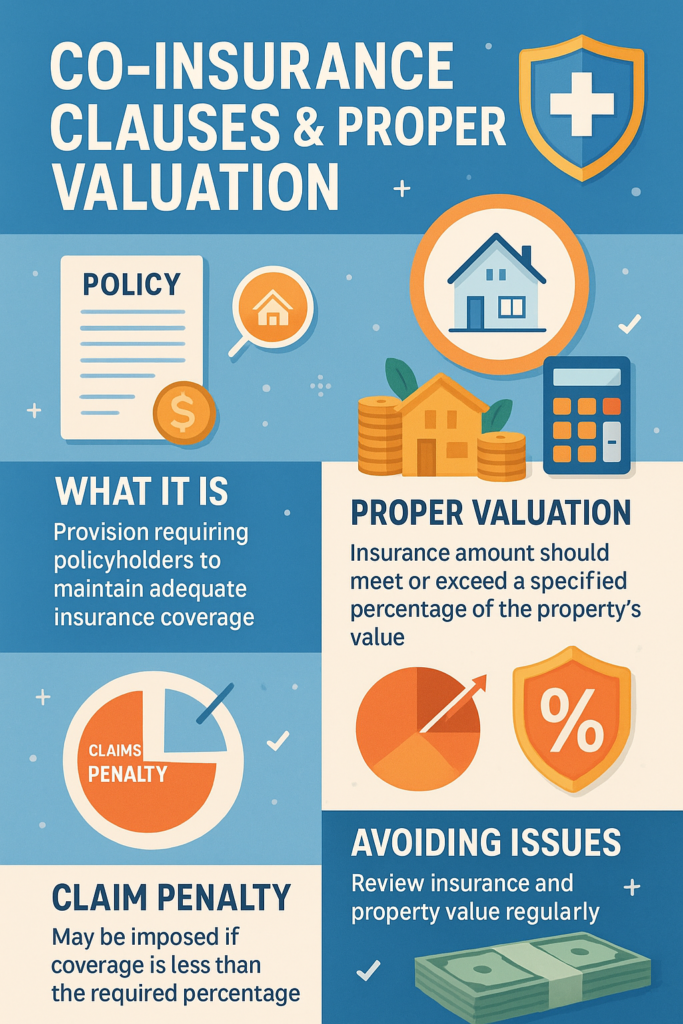
📊 Co-Insurance Clauses & Proper Valuation 🇨🇦
In commercial property insurance across Canada, one of the most commonly misunderstood concepts is the co-insurance clause. Misinterpreting how it works can lead to unpleasant—and costly—surprises when it’s time to file a claim.
⚡ What Is Co-Insurance?
A co-insurance clause requires property owners to insure their building or contents to a specific percentage of their total value—typically 80%, 90%, or 100%. If your coverage falls short of that requirement and you suffer a partial loss, your insurer may apply a co-insurance penalty, which reduces the amount paid on your claim.
💡 Example
Suppose your building is valued at $1,000,000, and your policy carries a 90% co-insurance requirement. You must therefore insure it for at least $900,000. If you only insure for $600,000 and experience a $200,000 loss, your insurer could apply a penalty—leaving you responsible for a significant portion of the costs.
🏗️ Why Proper Valuation Matters
- Accurate Appraisals 🏢: Regular appraisals ensure your coverage reflects true replacement costs.
- Inflation & Construction Costs 📈: Rising material and labour expenses can quickly make old coverage limits inadequate.
- Peace of Mind 🛡️: Keeping valuations current helps ensure fair claim payments and prevents unexpected penalties.
✅ The Takeaway
The co-insurance clause is designed to promote fairness in premium pricing—but it also places responsibility on policyholders. Reviewing and updating your property valuation regularly is the best way to avoid underinsurance and ensure full protection when it matters most.
👉 When was the last time you compared your policy limits to today’s rebuild costs?
#CommercialInsurance #CoInsurance #PropertyInsurance #RiskManagement #InsuranceCanada #BritishColumbia #BusinessProtection #harpreetsingh