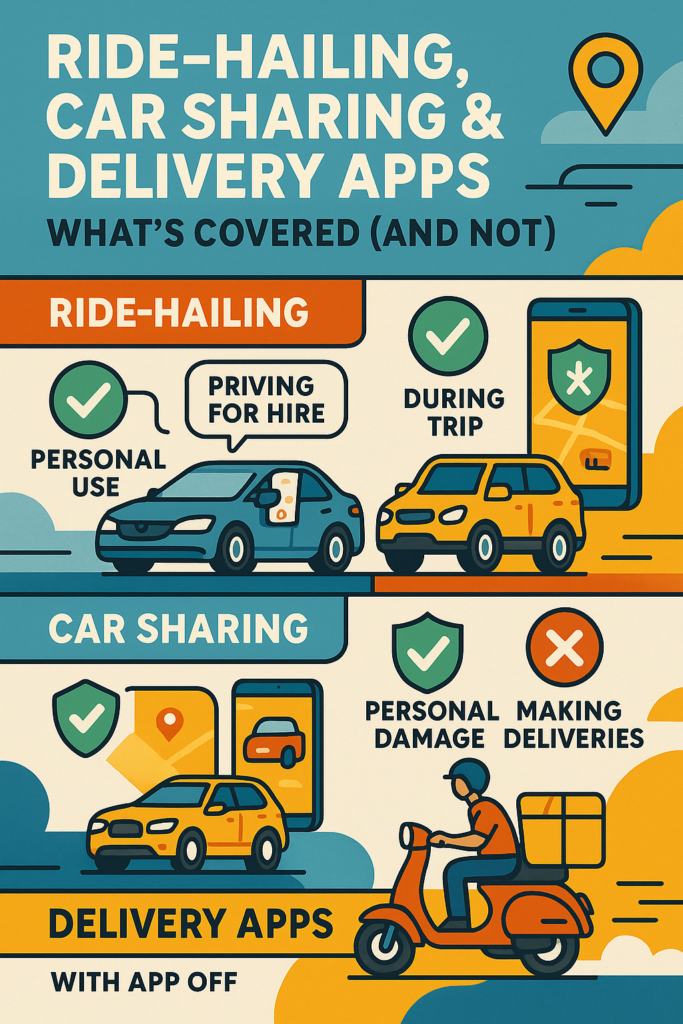
🚗📱 Ride-Hailing, Car-Sharing & Delivery Apps: What’s Covered — and What’s Not 🇨🇦🇧🇨
The way we use our vehicles is evolving. From ride-hailing services like Uber and Lyft to car-sharing platforms and food delivery apps, thousands of British Columbians now rely on their cars for flexible income. But when it comes to insurance, the details can quickly get complicated.
⚡ Ride-Hailing (e.g., Uber, Lyft)
- In B.C., ICBC provides blanket coverage while drivers are logged into the app—whether they’re waiting for a fare or transporting a passenger.
- Your personal Autoplan policy applies only when the app is turned off.
📦 Delivery Apps (e.g., SkipTheDishes, DoorDash, Uber Eats)
- Using your vehicle for deliveries is often not covered under a standard personal auto policy.
- ICBC offers delivery-specific coverage that must be added if you’re using your vehicle for this purpose.
🚙 Car-Sharing (e.g., Evo, Modo, Zipcar)
- Coverage is generally included in the rental agreement, though limits and deductibles can vary.
- Always confirm what’s included—collision, liability, and comprehensive coverage—and consider optional protection for added peace of mind.
❌ Common Misconceptions
- “My personal auto policy covers me for side gigs.” → Not necessarily. Business or commercial use often requires additional coverage.
- “The app takes care of everything.” → Coverage may only apply under specific conditions.
✅ The Bottom Line
If you’re driving for income—or using or lending a shared vehicle—it’s essential to know when your personal policy applies and when commercial or app-based coverage takes over.
👉 Before you start your next trip or delivery, review your insurance to avoid costly surprises.
#ICBC #RideHailing #CarSharing #DeliveryDrivers #AutoInsurance #BritishColumbia #InsuranceCanada #RiskManagement #HarpreetSingh