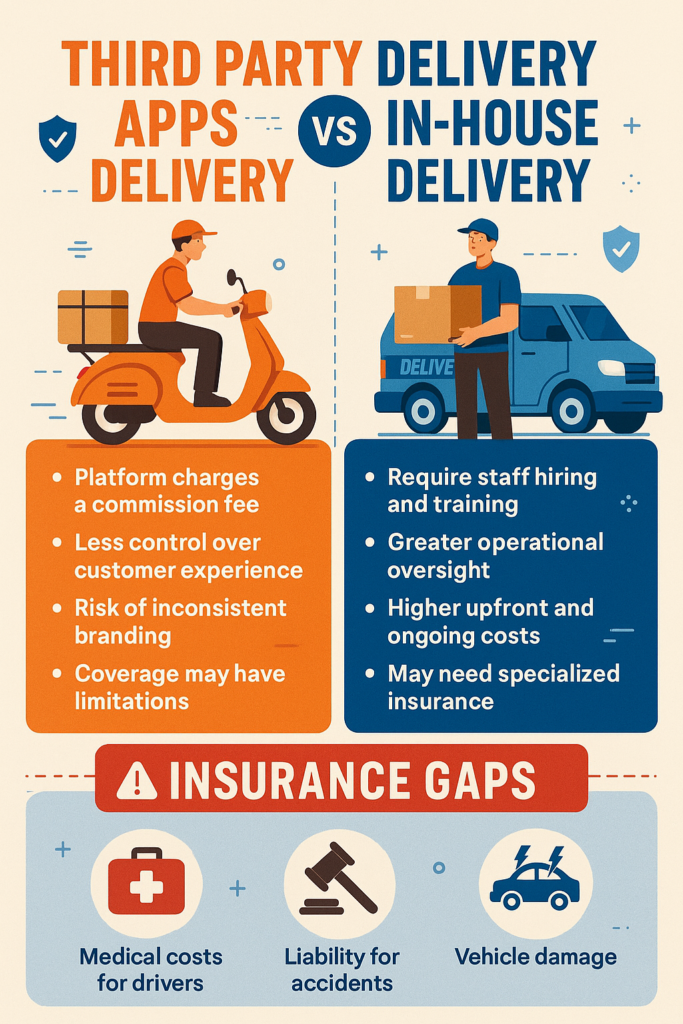
📦 Third-Party Delivery Apps vs. In-House Delivery: Insurance Gaps 🚗🇨🇦
The food delivery industry has exploded in Canada, with restaurants and retailers using both third-party platforms (like UberEats, SkipTheDishes, and DoorDash) and their own in-house delivery teams. However, each model presents unique insurance exposures and potential gaps that business owners must understand.
⚡ Third-Party Delivery Apps
• Delivery drivers are typically independent contractors, not employees of your business.
• The platform may offer limited liability coverage, but this often protects the app itself first—not your business.
• If food causes illness 🤢 or a driver injures someone during delivery, your restaurant could still be named in a lawsuit.
🚗 In-House Delivery
• When using employees or company vehicles, liability falls directly on your business.
• Commercial Auto Insurance is required for vehicles owned by the business.
• If employees use their personal vehicles, Non-Owned Auto Liability is necessary to protect against lawsuits involving your business.
📌 The Insurance Gaps
• Relying on third-party apps? Don’t assume their policy fully protects your business.
• Running in-house delivery? Ensure your liability, auto, and workers’ compensation policies align with the risks you face.
• In both scenarios, consider adding Product Liability coverage, as food-related illness claims often target the restaurant—not the driver.
✅ The Takeaway
Whether you outsource delivery or manage it in-house, it’s crucial to review your coverage thoroughly. Insurance gaps in delivery can leave businesses exposed to significant costs if something goes wrong.
👉 Are your delivery exposures fully covered?
#DeliveryInsurance #CommercialAuto #NonOwnedAuto #ProductLiability #InsuranceCanada #RiskManagement #BritishColumbia #RestaurantInsurance #harpreetsingh