🔥 Kitchen Fire Risk: Hood Suppression & Grease Management 🍳🇨🇦
Commercial kitchens are the backbone of Canada’s restaurant and hospitality industry, but they also carry significant fire risks. Between open flames, hot oils, and constant cooking, the importance of fire prevention and preparedness cannot be overstated. Two of the most effective safeguards against kitchen fires are hood suppression systems and grease management.
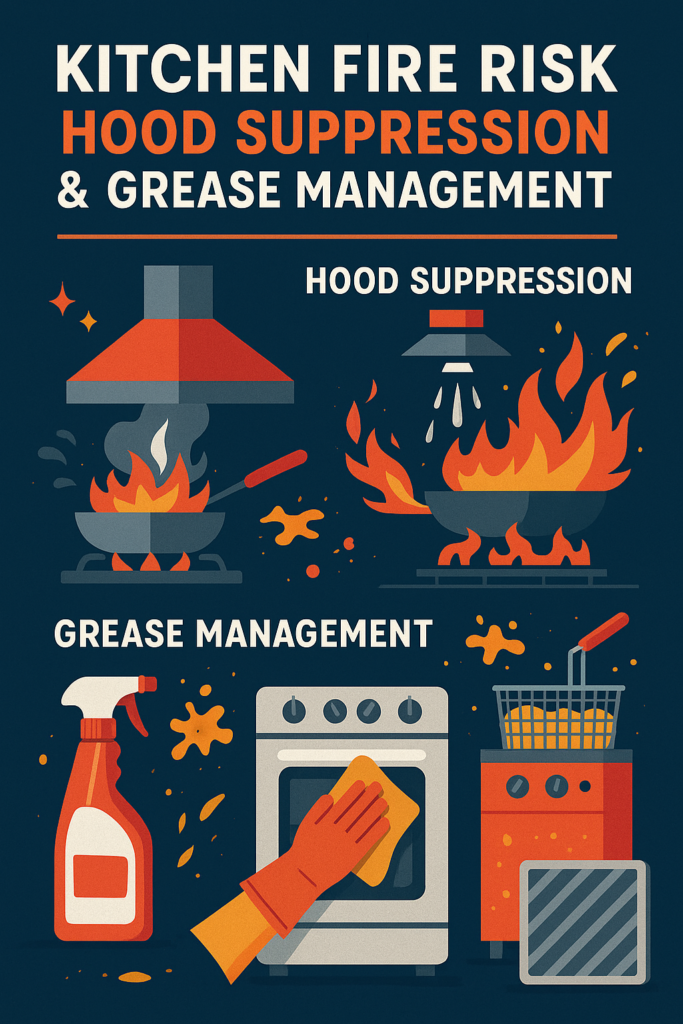
⚡ Hood Suppression Systems
• Automatic suppression systems installed in kitchen exhaust hoods detect heat and flames.
• These systems release fire-suppressing agents directly over stoves, grills, and fryers, stopping fires before they can spread.
• Many insurers and local fire codes require these systems. Regular maintenance—such as inspections and testing—is essential to ensure they remain effective.
🧴 Grease Management
• Grease buildup in ducts, hoods, and filters is a leading cause of restaurant fires.
• Regular cleaning schedules—daily for filters, and professional duct cleaning every 3–6 months—can dramatically reduce ignition risks.
• Proper grease disposal prevents fire hazards, plumbing issues, and environmental concerns.
📌 Why It Matters in Canada
With insurance claims for kitchen fires often reaching tens or even hundreds of thousands of dollars, insurers pay close attention to fire safety protocols when underwriting restaurant policies. Effective fire prevention measures not only protect lives and property but can also result in better insurance terms and lower premiums.
✅ The Takeaway
Kitchen fire safety is not just about compliance—it’s a smart business strategy. Investing in hood suppression and robust grease management practices helps safeguard your staff, customers, and your bottom line.
👉 Restaurant owners: When was the last time your hood system and ducts were inspected?
#RestaurantInsurance #FirePrevention #RiskManagement #InsuranceCanada #CommercialKitchens #BritishColumbia #HospitalityBC #harpreetsingh