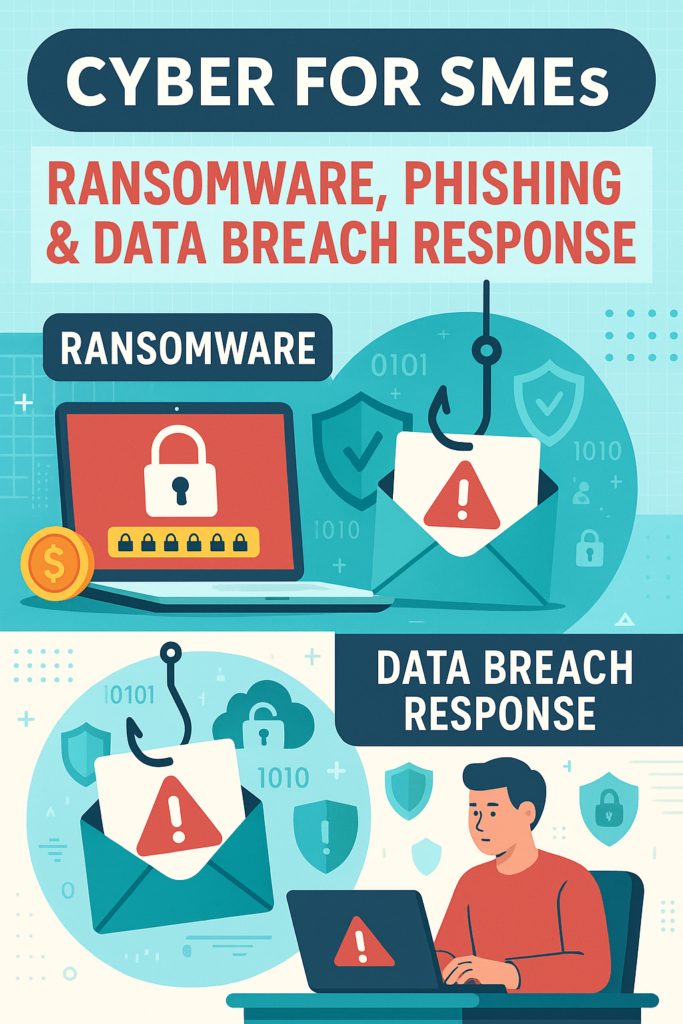
💻 Cybersecurity for SMEs: Ransomware, Phishing & Data Breach Response 🇨🇦
Small and mid-sized enterprises (SMEs) are the backbone of Canada’s economy—but they’re also prime targets for cybercrime. From ransomware attacks to phishing scams and data breaches, even a single incident can disrupt operations, erode customer trust, and cause lasting financial damage.
⚡ Top Cyber Risks for SMEs
- Ransomware 🔒: Hackers lock systems and demand payment to restore access. Recovery costs often far exceed the ransom itself.
- Phishing 📧: Fraudulent emails trick employees into sharing passwords, transferring funds, or clicking malicious links.
- Data Breaches 🔓: Sensitive customer or employee information—credit cards, health records, or personal identifiers—is stolen, triggering privacy laws such as PIPEDA or provincial regulations like BC’s PIPA.
🛡️ How Cyber Insurance Helps
- Incident Response 🚨: Covers forensic IT services, breach notifications, and credit monitoring for affected customers.
- Legal & Regulatory Support ⚖️: Provides guidance on navigating Canadian privacy compliance.
- Business Interruption 💼: Protects income when systems are down.
- Ransom Payments & Negotiation 💰: Assists with ransomware demands under professional oversight.
📌 Why It Matters in Canada
Many SMEs assume cybercriminals only target large corporations. In reality, attackers often view smaller businesses as “low-hanging fruit” due to weaker security controls. Without a response plan and proper coverage, recovery can be overwhelming.
✅ The Takeaway
Cyber threats are no longer just “IT problems”—they’re core business risks. For Canadian SMEs, a combination of employee training, strong security tools, and cyber liability insurance is the best way to build resilience.
👉 Has your business tested its cyber response plan?
#CyberInsurance #SMEsCanada #Ransomware #Phishing #DataBreach #RiskManagement #InsuranceCanada #PrivacyCompliance #harpreetsingh