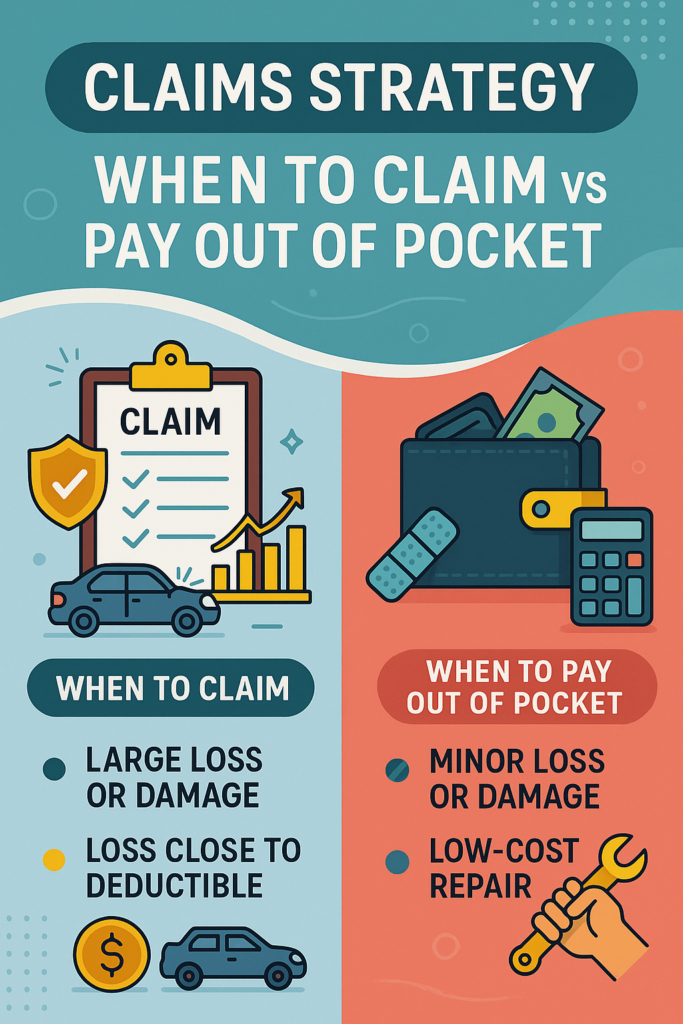
📝 Claims Strategy: When to File a Claim vs. Pay Out of Pocket 🇨🇦
Filing an insurance claim can seem like the obvious next step after a loss—but sometimes, it’s worth pausing to ask: should you file a claim, or cover the cost yourself? A thoughtful approach can protect both your finances today and your insurance rates in the long run.
⚡ When It Makes Sense to File a Claim
- Major Losses 🔥💧: Significant events such as fire, flood, theft, or major vehicle accidents should always be reported to your insurer.
- Liability Risks ⚖️: If someone is injured or there’s any chance of legal action, a claim is essential—never pay these expenses out of pocket.
- Costs Above Your Deductible 💰: If the damage far exceeds your deductible, filing a claim is typically the smarter financial move.
🔧 When Paying Out of Pocket May Be Wiser
- Minor Damages 🛠️: Small repairs—like a cracked window or minor fender-bender—may cost less than, or only slightly more than, your deductible.
- Claim Frequency 📊: Multiple small claims within a short time frame can raise your premiums or affect your eligibility with some insurers. In these cases, covering minor expenses yourself can help protect your long-term rates.
📌 Why Strategy Matters
In Canada, insurers evaluate both the size and frequency of your claims. A single large loss is usually manageable—but a series of small ones can lead to surcharges or higher renewal premiums.
✅ The Takeaway
Not every loss is worth claiming. Use your insurance for the big risks, and handle minor issues independently when it makes sense. A balanced claims strategy protects your coverage, minimizes rate increases, and keeps you financially resilient over time.
#InsuranceTips #ClaimsStrategy #RiskManagement #InsuranceCanada #AutoInsurance #HomeInsurance #BCDrivers #harpreetsingh