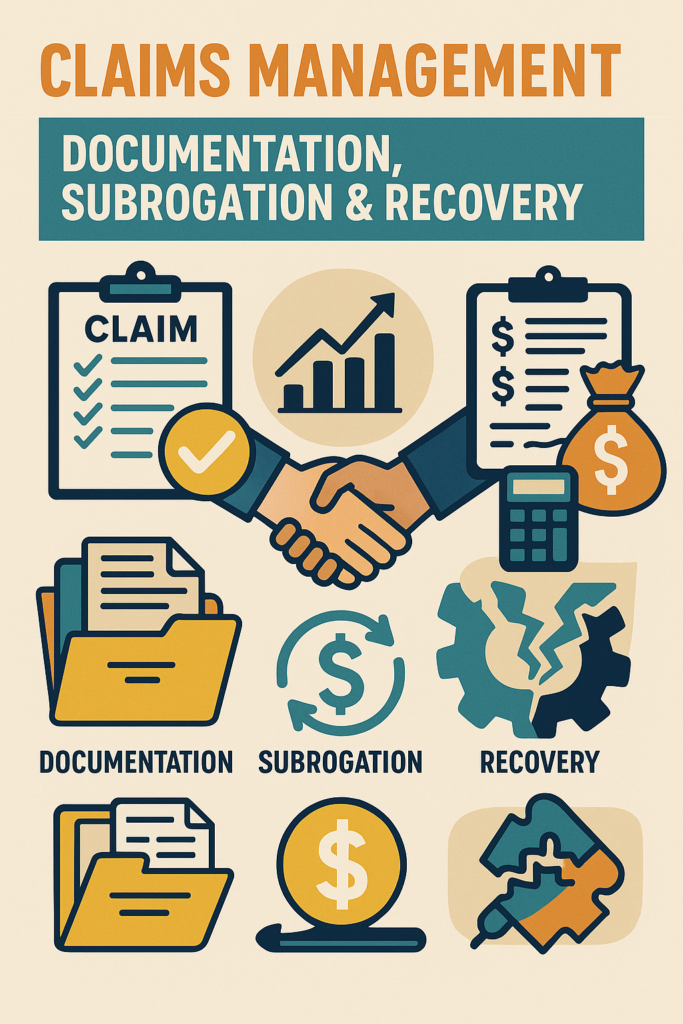
📂 Claims Management: Documentation, Subrogation & Recovery 🇨🇦
Filing an insurance claim is only the first step. How the claim is managed can have a major impact on the outcome—for both policyholders and insurers. In Canada, effective claims management often comes down to three essentials: documentation, subrogation, and recovery.
📝 Documentation
- Strong claims start with strong evidence.
- Photos 📸, receipts, incident reports, and witness statements all help establish the scope of loss.
- Incomplete or delayed documentation is one of the leading reasons claims are delayed—or denied.
⚖️ Subrogation
- When another party is at fault, insurers may pursue subrogation—recovering costs from the responsible party.
- Example: If your vehicle is damaged in a collision caused by another driver, your insurer may pay your claim and then recover costs from the at-fault driver’s insurer.
- Subrogation helps keep premiums stable by ensuring expenses fall where they belong.
💰 Recovery
- The ultimate goal of any claim is fair financial recovery—restoring you to the position you were in before the loss.
- Recovery can include repair or replacement costs, medical expenses, lost income, or business interruption.
- Timely communication and cooperation with your broker and insurer help ensure smoother settlements.
✅ The Takeaway
Effective claims management isn’t just about filing a form—it’s about thorough documentation, making use of subrogation, and ensuring full recovery.
👉 When was the last time you reviewed your claims process with your broker?
#ClaimsManagement #Subrogation #RiskManagement #InsuranceCanada #BusinessProtection #Documentation #Recovery #BritishColumbia #harpreetsingh