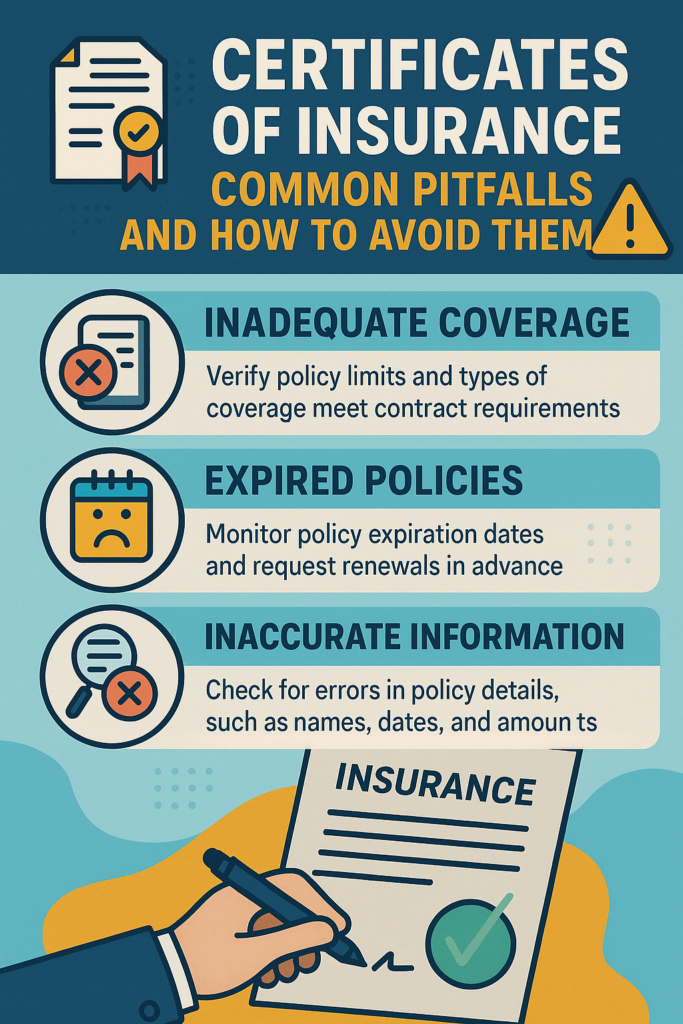
📄 Certificates of Insurance: Common Pitfalls and How to Avoid Them 🇨🇦
In Canadian business contracts—whether in construction, leasing, or service agreements—Certificates of Insurance (COIs) are a standard requirement. While they provide proof of insurance, they don’t always guarantee the protection you might assume. Here are some of the most common pitfalls to watch for:
⚠️ Common Pitfalls
- Assuming a COI Equals Coverage: A certificate only shows evidence of insurance on the issue date. It is not the policy itself, and endorsements or exclusions may significantly limit coverage.
- Missing Additional Insured (AI) Endorsements 🛡️: Simply listing someone as an “Additional Insured” on a certificate isn’t enough unless the underlying policy includes the proper endorsement.
- Expired or Outdated Certificates 📅: Certificates don’t update automatically. If coverage lapses mid-project, you could be left without protection.
- Relying on Minimum Limits: Contracts often require higher limits than what’s shown on the certificate. Falling short can mean a breach of contract—or uncovered claims.
✅ How to Avoid Them
- Request full policy endorsements, not just the certificate.
- Verify that coverage limits, Additional Insured status, and waivers of subrogation are properly included.
- Track policy expiration dates and request updated certificates before they lapse.
- Work with a broker to ensure your COIs match your contractual obligations.
📌 The Takeaway
Certificates of Insurance are a valuable risk management tool—but only when supported by the right endorsements and careful oversight. Don’t let paperwork create a false sense of security.
👉 When was the last time you reviewed your COI process?
#CertificatesOfInsurance #RiskManagement #CommercialInsurance #AdditionalInsured #CanadaBusiness #BritishColumbia #InsuranceCanada #harpreetsingh