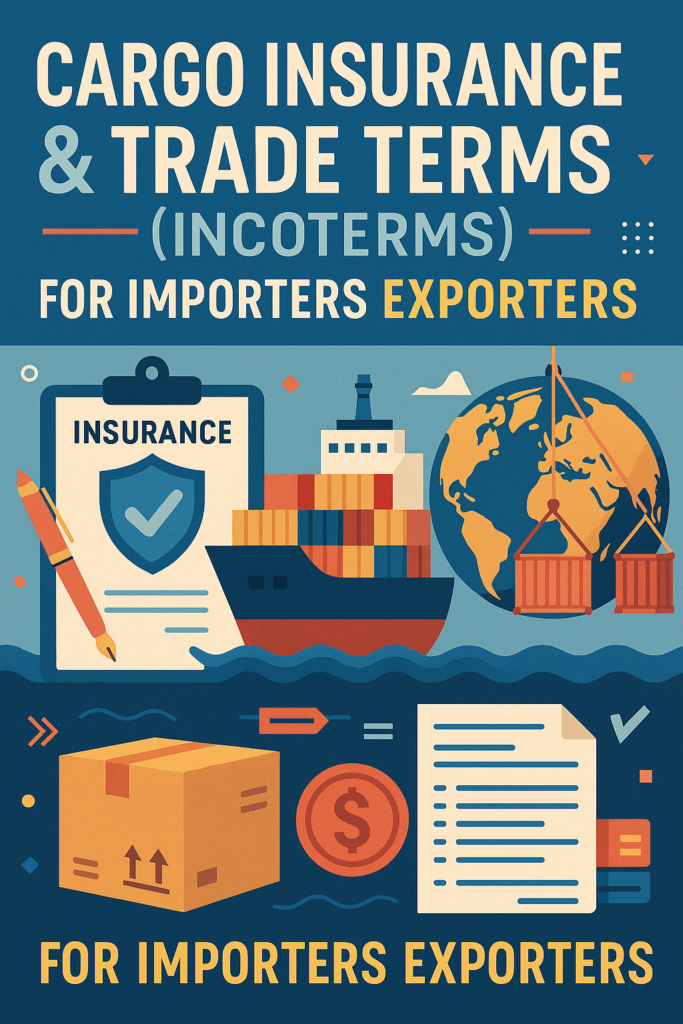
🚢 Cargo Insurance & Trade Terms (Incoterms) for Importers/Exporters 🇨🇦🌍
International trade is the lifeblood of many Canadian businesses—but it comes with significant risks. Whether shipping goods across the Pacific, trucking over the U.S. border, or moving freight by rail, understanding cargo insurance and Incoterms is essential to protecting your bottom line.
⚡ Cargo Insurance Basics
- Covers physical loss or damage to goods while in transit—by land, air, or sea.
- Protects against risks such as theft 🚨, fire 🔥, rough handling, or natural disasters 🌊.
- Policies can be tailored: “All Risk” coverage offers broad protection, while narrower policies apply only to specific perils.
📑 Why Incoterms Matter
Incoterms (International Commercial Terms) define who is responsible for costs, insurance, and risk at each stage of shipping. Examples include:
- FOB (Free On Board): The buyer assumes responsibility once goods are loaded onto the vessel.
- CIF (Cost, Insurance & Freight): The seller arranges and pays for insurance and shipping until the goods arrive.
- DDP (Delivered Duty Paid): The seller bears nearly all costs and risks until delivery.
📌 Canadian Context
With Vancouver serving as the Pacific Gateway and cross-border trade with the U.S. 🇺🇸 at record highs, Canadian importers and exporters must carefully align insurance coverage with trade terms. A misunderstanding could leave shipments uninsured at a critical stage.
✅ The Takeaway
Cargo insurance + the right Incoterms = peace of mind. Together, they ensure your goods are protected, responsibilities are clear, and business flows smoothly.
👉 Are your shipments properly covered from port to customer?
#CargoInsurance #Incoterms #ImportExport #RiskManagement #TradeCanada #InsuranceCanada #BritishColumbia #GlobalTrade #harpreetsingh